
What matters first.
- Start GEO work with your buyers’ questions and the information your website actually provides.
- Review access, product facts and evidence before producing more content. Define a verifiable outcome for each task.
- Repeat the same questions after changes. A better measured value can be informative without proving causation.
What is generative engine optimization?
Generative engine optimization (GEO) means improving the information that generative search systems can find, understand and use when answering relevant questions. The practical goal is to make your offer easier to assess through clear pages, reliable evidence and consistent facts.
GEO builds on SEO. An accessible page with useful information can support both search listings and generated answers. Source selection remains outside your control. Start with our GEO vs. SEO comparison if you need to decide where the approaches overlap.
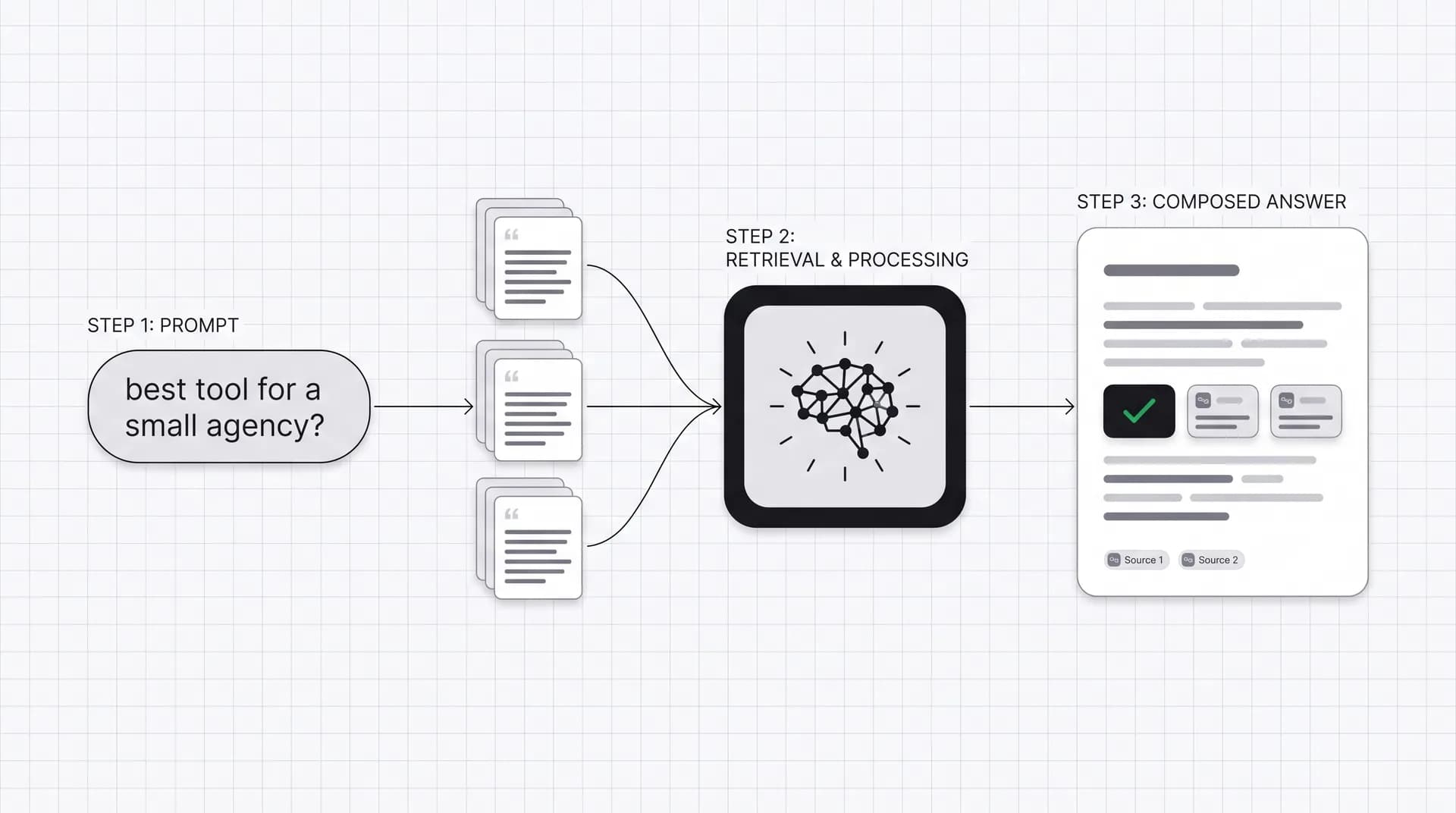
The eight-step GEO checklist
Use one important buyer question and its most relevant page as your starting point. The expected output makes each check concrete.
| Check | Expected output |
|---|---|
| 1. Identify buyer questions | A short list based on sales, support and real customer decisions. |
| 2. Match each question to a page | One suitable page, or a documented content gap. |
| 3. Check access | A working public page with appropriate indexing permissions. |
| 4. Clarify product facts | Specific answers about use cases, requirements and limitations. |
| 5. Add evidence | Verifiable sources, examples or documented experience. |
| 6. Improve navigation | Relevant internal links that help readers discover the page. |
| 7. Resolve conflicting information | Consistent names and facts across the pages you control. |
| 8. Record and review changes | A dated baseline and comparable follow-up checks. |
Make the answer useful before adding more content
Give the direct answer near the relevant heading. Then explain the conditions, evidence and exceptions a buyer needs. A definition alone is rarely enough for a purchase decision. Describe who the offer suits, what it does and where it falls short.
Consider a hypothetical agency tool: a buyer asks whether it supports multilingual client approvals. A useful page names the supported languages, explains the approval workflow and states any plan restrictions. “Powerful collaboration for everyone” leaves those questions unanswered. This is an illustrative example, not a claim about FameScan features.
Support statements with evidence you actually have: documented tests, original examples, clear methodology or relevant primary sources. Do not invent integrations, reviews or outcomes. Google’s helpful-content guidance emphasizes original value and a satisfying experience for the reader.
Use a table when it clarifies a real comparison and a short list when the reader needs steps. Neither format is a citation guarantee. Avoid generating many near-identical pages for small variations of the same question. Update the most relevant page when it can satisfy that need.
Check accessibility, indexing and structured data
A useful answer must be reachable. Check the page response, internal links and whether essential information requires a login or interaction. Review accidental indexing restrictions on pages intended for discovery. For Google, a page must meet its technical requirements to be eligible for indexing; eligibility does not guarantee inclusion.
Different providers use different crawlers and policies. Distinguish search access from training permissions when configuring them. There is no reason to open every crawler indiscriminately. Make the access decision for the specific service and purpose you want.
Does structured data help?
Use applicable structured data that accurately describes visible page content. It can support eligible search features, but does not guarantee an AI citation. Follow Google’s structured-data policies; do not add ratings, offers or claims that a visitor cannot verify on the page.
Do you need llms.txt?
Google’s guidance for generative AI features does not require a special AI text file or special schema markup. Prioritize accessible, useful content before treating an additional file as a ranking measure. This statement concerns Google’s requirements, not every possible use of such files.
Prioritize evidence over a long task list
Start with a page that answers an important commercial question and has a concrete problem. Fixing contradictory product information is easier to justify than rewriting an entire website because a single generated answer omitted your brand.
- High priority: A confirmed issue blocks access or creates false expectations.
- Medium priority: An important question is only partly answered and you can fill the gap reliably.
- Investigate later: There is a hypothesis but no clear user need or verifiable finding.
Keep external feedback independent and truthful. Manufactured mentions and invented testimonials do not provide reliable information about your offer.
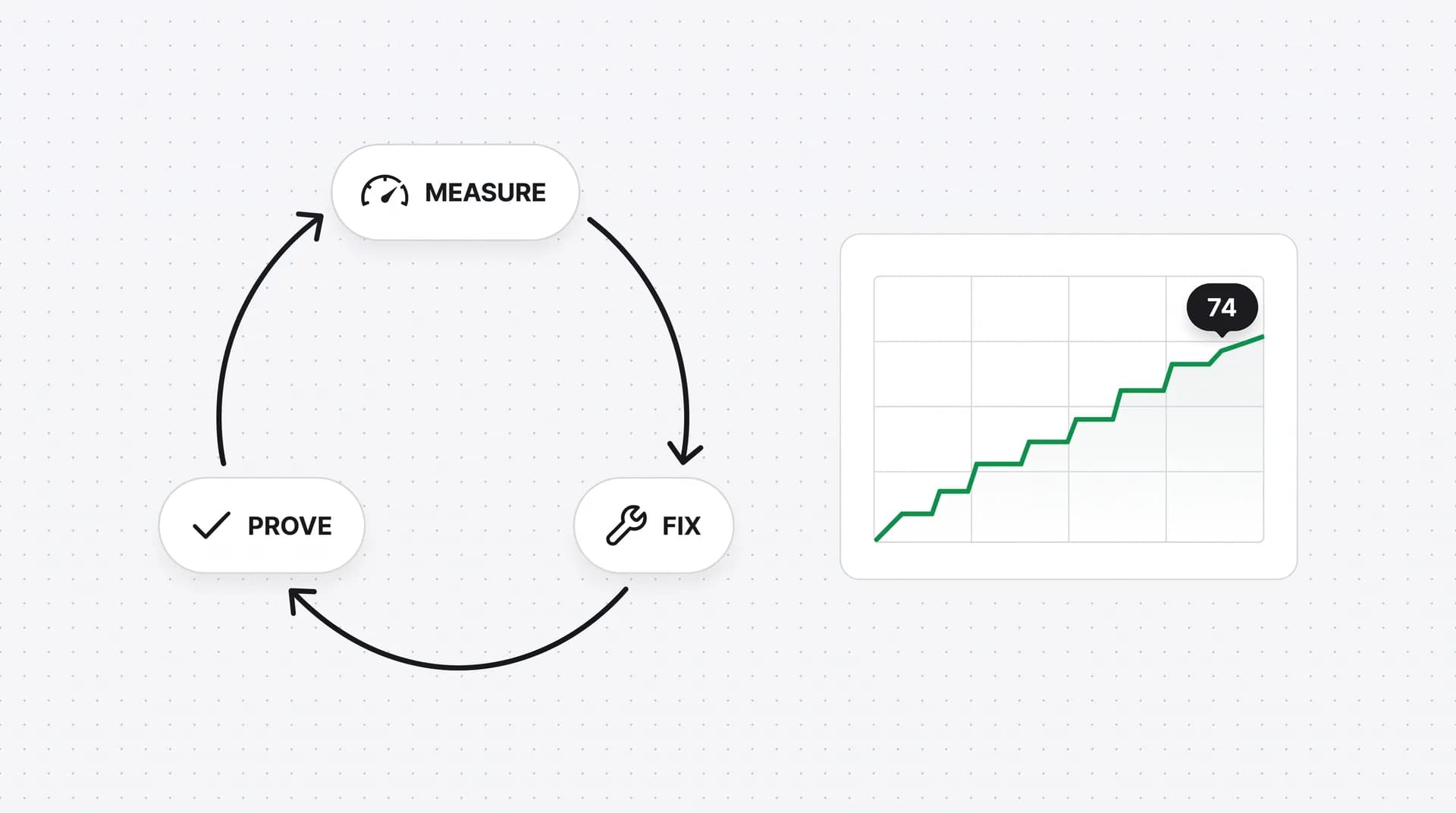
How to review the results
Record a baseline before making changes. Repeat the same questions with comparable engines, languages and target markets. Read the answers and cited sources alongside the metrics. Model changes, new competitors and changing source availability can affect the comparison.
Our AI visibility measurement guide includes metrics and a measurement template. FameScan helps examine buyer questions and sources; its Action Center provides recommendations with supporting evidence. These recommendations are working aids, not proven causal forecasts.
End each review with a decision: keep the change, investigate further or address another gap. An improvement for the reader can be worthwhile even when a short-term AI metric stays unchanged.
Frequently asked
How do I optimize a website for generative engines?
Define relevant buyer questions, check the matching pages for access and information gaps, then add verifiable answers. Record changes and repeat the same question set. The checklist above defines a concrete output for each step.
Is llms.txt required for GEO?
It is not required for Google’s generative search features. For other services, check their documented support. A file cannot replace accessible pages or reliable information and does not guarantee citations.
Which GEO task should come first?
Fix a confirmed access block or incorrect product information first. Then address recurring, purchase-relevant questions your website does not answer well. Priorities should follow the specific problem rather than a generic AI score.
Sources & further reading
Sources checked on 6 October 2026.