

What matters first.
- Investigate a specific buyer question: a brand mention, a source link and factual accuracy are separate findings.
- Manage search access and potential training use separately. Allowing access does not guarantee source selection.
- Tie each change to an evidenced information gap, then check the same questions again.
Learning how to rank in ChatGPT starts with three checks: can search access the relevant page, does it answer the buyer’s question, and does the response describe your brand accurately? Inspect actual answers and sources before planning more content. Better access and clearer product information create useful conditions, but neither guarantees a recommendation.
FameScan examines how your brand appears in AI answers to selected buyer questions and helps you compare answer text, sources and competitors. This guide takes you from a missing or inaccurate mention to a specific next action. The OpenAI guidance was checked on October 8, 2026.
How to rank in ChatGPT: what is the goal?
For a business, it means improving the information that helps prospective customers discover and assess its offer in a ChatGPT search answer. Start with a practical question: at which buying decision are we missing or being described incorrectly? A phrase such as “best software” is often too broad. A question about a particular use case reveals more about the information a buyer needs.
Separate three observations. A brand mention tells you the response names your business. A citation identifies a page linked as a source. A factual review establishes whether the description of your offer is correct. These can diverge: an answer names your product, links to a comparison and repeats an outdated restriction. Each observation calls for a different investigation.
Set a narrow working objective: “For questions about scheduling for bilingual teams, our actual language coverage should be understandable.” That gives your team a more useful assignment than “get first place in ChatGPT.” Also record whether the answer used web search. This scope helps you avoid treating a conversation about a brand the user already named as successful discovery among new customers.
How to do SEO for ChatGPT?
Begin with a question from a sales conversation where your offer would actually be relevant. Preserve the buyer’s requirements without inserting your own brand. Save the response and open its sources. Identify the statement you want to investigate: a missing feature, an incorrect audience description or a recommendation whose reasoning you need to understand.
OpenAI explains that ChatGPT can rewrite a question into more targeted search queries. Its official web search guidance also describes multiple selection factors and says placement is not guaranteed. Treat the response as a specific observation. A mention by itself does not establish a universal ranking factor.
Then write a hypothesis you can check. For example: “The relevant offer page does not name our supported languages, although those languages matter to this question.” Verify that statement first. If it is correct, add the confirmed information to the page. If it is wrong, examine the cited source or the page’s accessibility. A hypothesis is allowed to fail; that is how you avoid producing content without a reason.
Keep the assignment small enough to explain. One owner, one affected URL and one specific correction are enough for the first task. Our generative engine optimization checklist covers the broader implementation work. Here, ChatGPT search optimization starts with the answer you actually investigated.
Separate search access, training and user requests
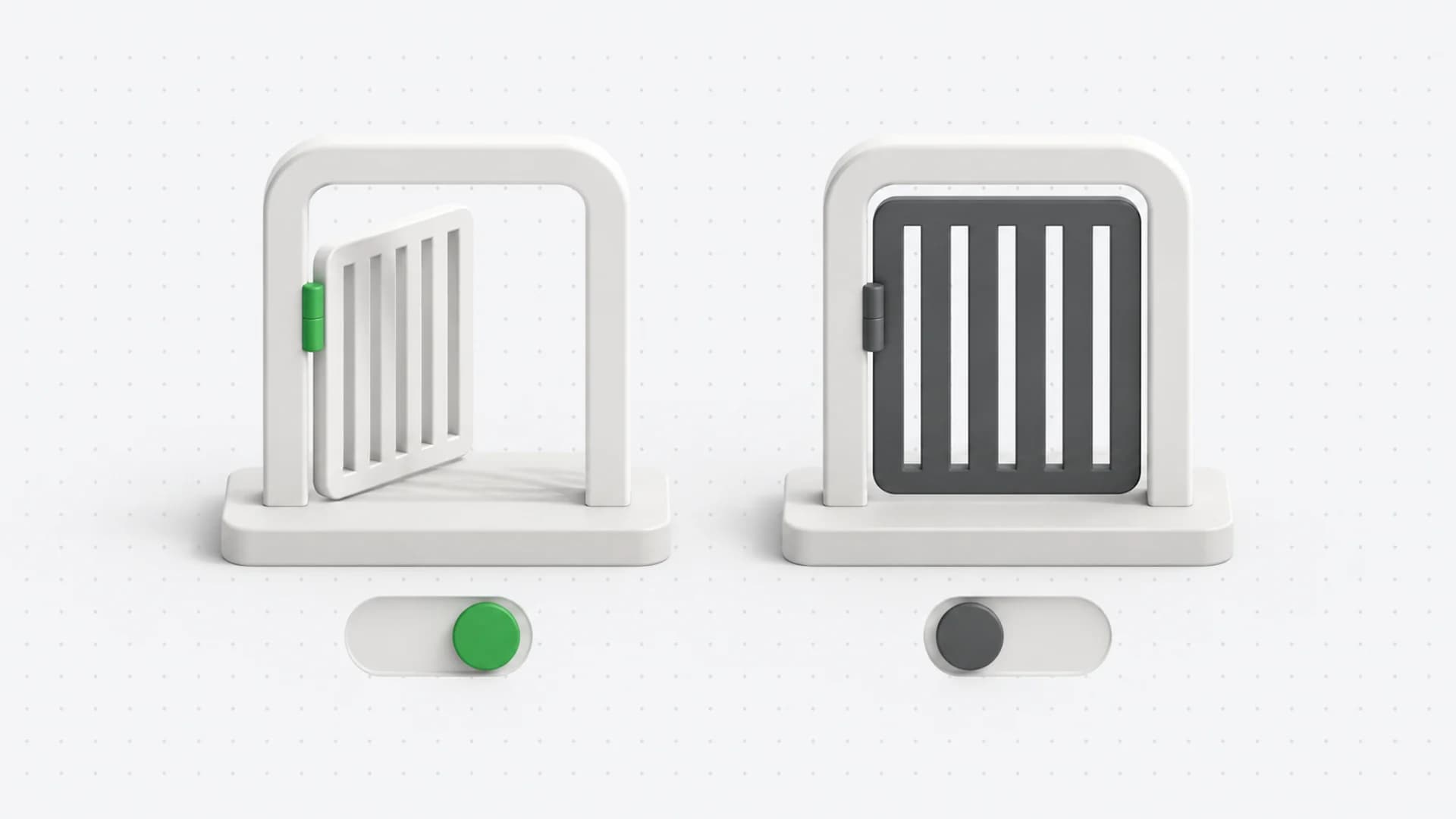
The OpenAI crawler documentation separates three purposes: OAI-SearchBot supports search, GPTBot collects content potentially used for model training, and ChatGPT-User can visit pages for certain user actions. Search access and training permission are independent settings. ChatGPT-User does not control search inclusion.
Ask your technical owner to check the intended search access for important offer pages. This includes the applicable robots.txt rules and potential blocks at the host or security service in front of the website. Content visible in your browser may still sit behind a security challenge for another request. Have someone inspect the actual content returned, rather than relying solely on a green status indicator.
A useful technical assignment names the page, the observed problem and the intended result. “Check whether verified searchbot requests receive our service description” is more precise than “allow every AI bot.” Record the existing rule and any change. Whether content may be used for training remains a separate business decision.
A successful request establishes accessibility first. It does not establish inclusion, a citation or a recommendation. Equally, a missing citation does not by itself prove a technical block. Keeping these distinctions clear prevents unnecessary changes to access settings and unnecessary rewrites of a page whose actual problem lies elsewhere.
Worked example: mentioned without being cited
Consider a fictional scheduling software vendor. Its product supports German and English booking pages, but the public feature page only says “multilingual booking.” A buyer asks: “Which scheduling tools suit a small team with German-speaking and English-speaking customers?” The response names the vendor and links to an older software comparison beside its description.
The person responsible checks the available feature in the product and adds the confirmed languages to the offer page. They also explain whether the statement applies to booking pages, notifications or the administration interface. That distinction helps a buyer: two translated booking pages do not automatically mean that every part of the software is bilingual.
The team can then propose a factual correction to the comparison’s publisher, supported by public evidence. It records the two actions separately. In a later check, it reviews both the description and the citation again. If the description becomes accurate, that is useful even if the comparison remains the cited source. It still does not prove that the team’s changes caused the result.
How to optimize a website for ChatGPT?
Work on the page that answers the unresolved buyer decision. A general company introduction is rarely the clearest home for detailed language coverage, prerequisites or contract conditions. Give each important statement a responsible page and link to it from the relevant product overview. Visitors can then find the evidence, and your team knows where to maintain it.
Write a compact explanation of the offer, its conditions and its evidence. In the fictional example, it might read: “Our booking pages are available in German and English. The language is configured per booking page. The administration interface is in German.” Use this structure only with your actual product facts. Its value lies in the verifiable distinction, without assuming that a particular sentence pattern receives special treatment.
Next, check other pages you control for conflicting statements. A precise product page is less helpful when the pricing page promises something different. Add an update date where it helps the reader assess the information, and place actual prerequisites alongside the feature. Avoid hiding an important condition in a distant FAQ while the main page makes an unrestricted claim.
If you are asking how to get cited by ChatGPT, start by making the intended evidence worth inspecting. This is an editorial decision, not proof of a known algorithm. Read the page as a buyer: can I determine whether this offer meets my requirement? If the answer remains unclear, the page probably needs a specific fact rather than another repetition of the keyword.

Investigate competitor sources
When a response names competitors, read the cited sources with a clear task. Which information supports the recommendation? Is it the intended audience, an available feature, a directory profile or a substantiated comparison? Record the particular statement and its page. Counting external links alone does not explain why your offer is missing.
Compare the conditions as well. A vendor serving large international teams may be unsuitable for your narrow question. Frequent mentions would then be an unhelpful benchmark for your next product page. Conversely, a smaller competitor may clearly explain the exact detail your website leaves unresolved. In that case, the information gap is the useful finding, regardless of the brand’s size.
Distinguish what you can correct from what another publisher decides. You can check your own feature statements, product names and public profiles for accuracy. That does not entitle you to an independent recommendation. Provide evidence when requesting a justified correction and respect the publisher’s editorial decision. Do not purchase apparently neutral claims and later report their appearance as independent evidence.
The competitors and visibility gaps tracked in your project help organize this comparison. Keep returning to the original question: does the source actually support the statement that matters to this buying decision?
Compare the same ChatGPT questions over time
For this diagnosis, begin with a small, stable group of buyer questions. Preserve the original wording and use comparable languages, target markets and access methods. Separate questions that already name your brand from open questions about available vendors. Otherwise, the result may improve simply because you supplied the name you wanted the system to mention.
When reviewing brand mentions after a change, record three observations: whether the brand appears, which URL is cited and whether the decisive statement is accurate. A technical failure remains a failure, rather than an answer without a mention. Repeat the comparison instead of inferring a trend from one pleasing result. Our guide to measuring AI visibility explains the full measurement framework.
Add identifiable website visits as a separate outcome. OpenAI’s publisher FAQ describes the utm_source=chatgpt.com parameter for referral links. Check how your analytics actually records those visits. A visit is different from a brand mention without a click; an inquiry is different again. Do not add the figures together as though they formed a single measure of reach.
Decide in advance what evidence would justify continuing an action. One example is a previously incorrect description staying accurate across several comparable observations. Retain contradictory results too. This makes the review more useful and helps you decide whether to keep investigating the same gap or test another hypothesis.
Examine ChatGPT evidence with FameScan
FameScan organizes the investigation around projects and selected buyer questions. The prompts and answers view lets you inspect returned text and cited sources. This is especially useful when a positive metric sits alongside an inaccurate or incomplete description of your offer. The supporting answer remains the starting point for your decision.
Its ChatGPT measurement uses a search request through the OpenAI API and retains returned answer text and citation references. The target market is provided as context within the request. Interpret the result as a defined sample under those conditions. It does not identically replay a personal ChatGPT session with its earlier conversation and individual settings.
The Action Center provides recommendations derived from rules, with supporting evidence. Check whether a recommendation fits your actual offer page before your team implements a change. Brand Discovery provides a one-time starting analysis; the dashboard requires an active subscription. An active trial of that subscription also qualifies. The product walkthrough explains the path from your website to the questions being examined.
A decision tree for your next action
Use this sequence for the next answer that needs attention. Follow the first applicable finding and record its evidence. You will finish with a justified assignment rather than a collection of general optimization ideas.
- Do you have a valid answer? If not, investigate the request failure and repeat the check. If yes, inspect the decisive statement.
- Is the description factually wrong? If yes, compare the cited source with your actual offer. Correct the responsible page you control or prepare an evidenced correction request.
- Is a relevant detail missing? If yes, add it and its conditions to the appropriate offer page. If it is already clear, check that page’s technical search access.
- Is the page accessible and the information complete? If yes, inspect more comparable answers and their sources. A missing mention alone does not justify another change.
- Has a specific gap been addressed? Record the change and repeat the same questions. Evaluate factual presentation, citations and identifiable subsequent actions separately.
End the session with a decision: make a correction now, assign a technical investigation or gather more evidence. The last option is useful too when the available observations do not justify changing the page. That is a practical way to improve ChatGPT visibility without turning every fluctuation into a new content project.
Frequently asked
How to do SEO for ChatGPT?
Start with a real buyer question and inspect the answer and its sources. Investigate search access, missing offer details or factual errors. Address one specific gap, then repeat the question under comparable conditions. A single new mention does not establish lasting improvement.
How to optimize a website for ChatGPT?
Map important buyer questions to relevant, publicly accessible pages. Explain your actual offer, its conditions and verifiable evidence. Check internal links and search access. OpenAI decides whether a page is selected, so these improvements do not establish a particular placement.
Is SEO dead now with AI?
An understandable, accessible website remains useful to visitors and search systems. Add AI answer reviews as another perspective. Traditional search positions, citations within answers and qualified website inquiries measure different things and should be evaluated separately.
How do I get cited by AI?
Publish specific, verifiable information on an accessible page and investigate the sources appearing for your buyer questions. A mention of your brand may link to an external source. Inspect the actual citation and the claim it supports. No reliable promise can establish that your page will be cited.
What content works best in AI search?
Choose content around the unresolved buyer decision: available services, substantiated comparisons, operating conditions or a documented example. No particular format guarantees visibility. Your practical test is whether the page accurately and clearly closes the information gap you found.
How can I measure my AI visibility?
Keep answers and sources for a stable set of relevant questions. Use comparable languages, target markets and access methods, and separate failures from valid answers without a mention. FameScan helps investigate selected questions; its ChatGPT measurement uses search requests through the API rather than identically replaying a personal chat session.
Sources & further reading
Sources checked on 8 October 2026.