
Every analytics product eventually asks its users to trust a number. We think you should never have to trust ours — you should be able to check it. This is how the FameScan Visibility Score works, all the way down.
Why one number at all
AI visibility is genuinely multi-dimensional: five engines, dozens of buyer questions, multiple countries, and answers that change daily. Nobody can steer by a spreadsheet of raw answers. A single score exists for one reason — so you can see direction at a glance: are we becoming more or less recommendable, and did last month’s work move anything?
The danger of single scores is that they become vanity metrics. Our answer to that is radical legibility: the formula is published, every input is inspectable, and every data point traces to a stored engine answer.
The seven categories
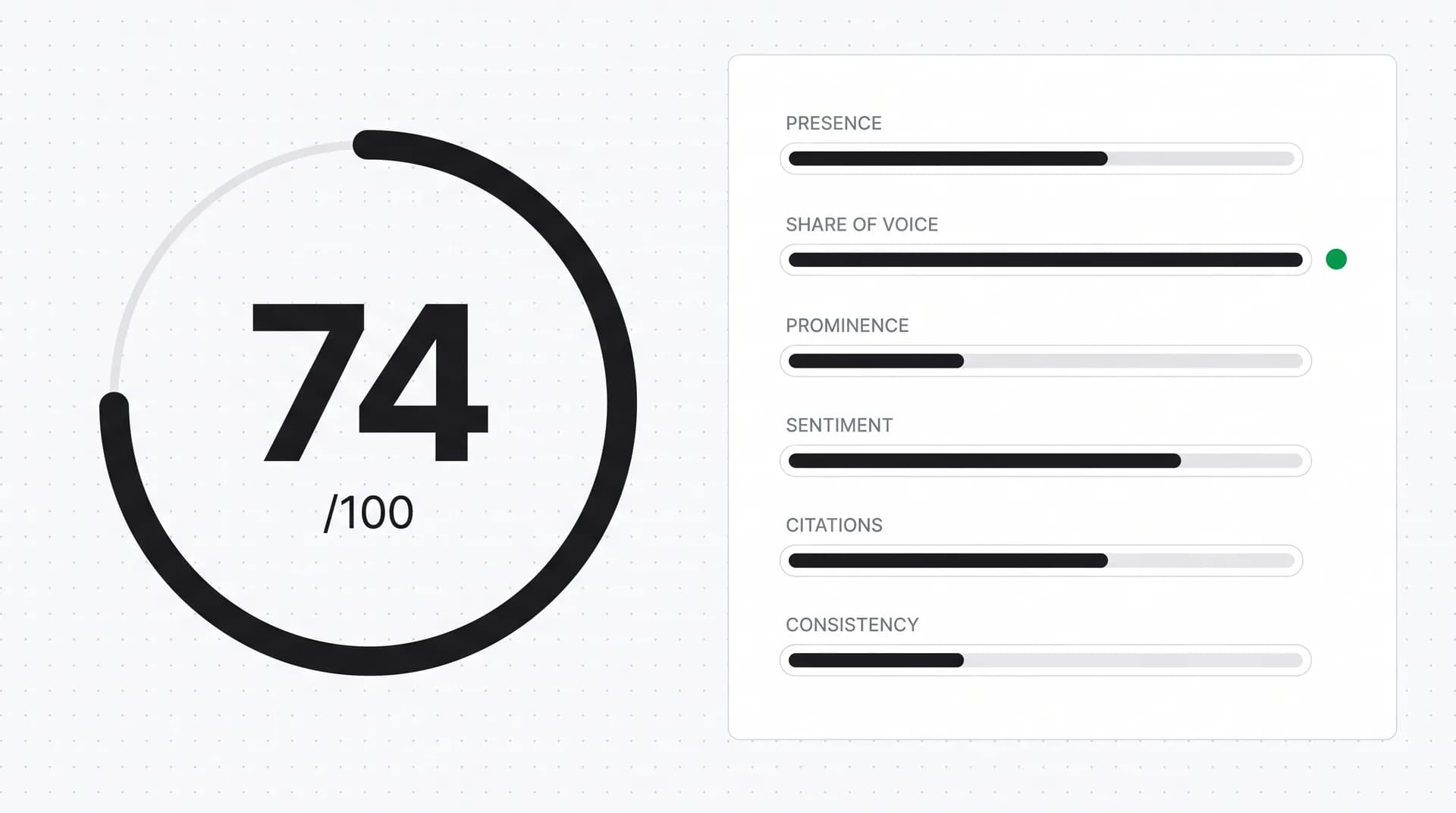
- Presence — do you appear in answers to your buyers’ questions at all?
- Share of Voice — how much of the conversation is you, versus your competitors?
- Prominence — when you appear, are you the lead recommendation or a footnote?
- Recommendation — when you appear, does the answer actively recommend your brand?
- Sentiment — does the engine describe you positively, neutrally, or with hedges and warnings?
- Citations — do answers cite your domain as a source, or talk about you from elsewhere?
- Consistency — is all of the above stable across engines, countries and time, or a lucky streak?
The gate: presence first
The score is gated: if you barely appear in answers at all, strong sub-metrics can’t carry you to a flattering total. A brand mentioned twice with glowing sentiment is not more visible than a brand mentioned in half of all answers with mixed sentiment — and the score must not pretend otherwise. Presence gates everything, because in AI search, absence is the failure mode that matters.
Every number has a receipt
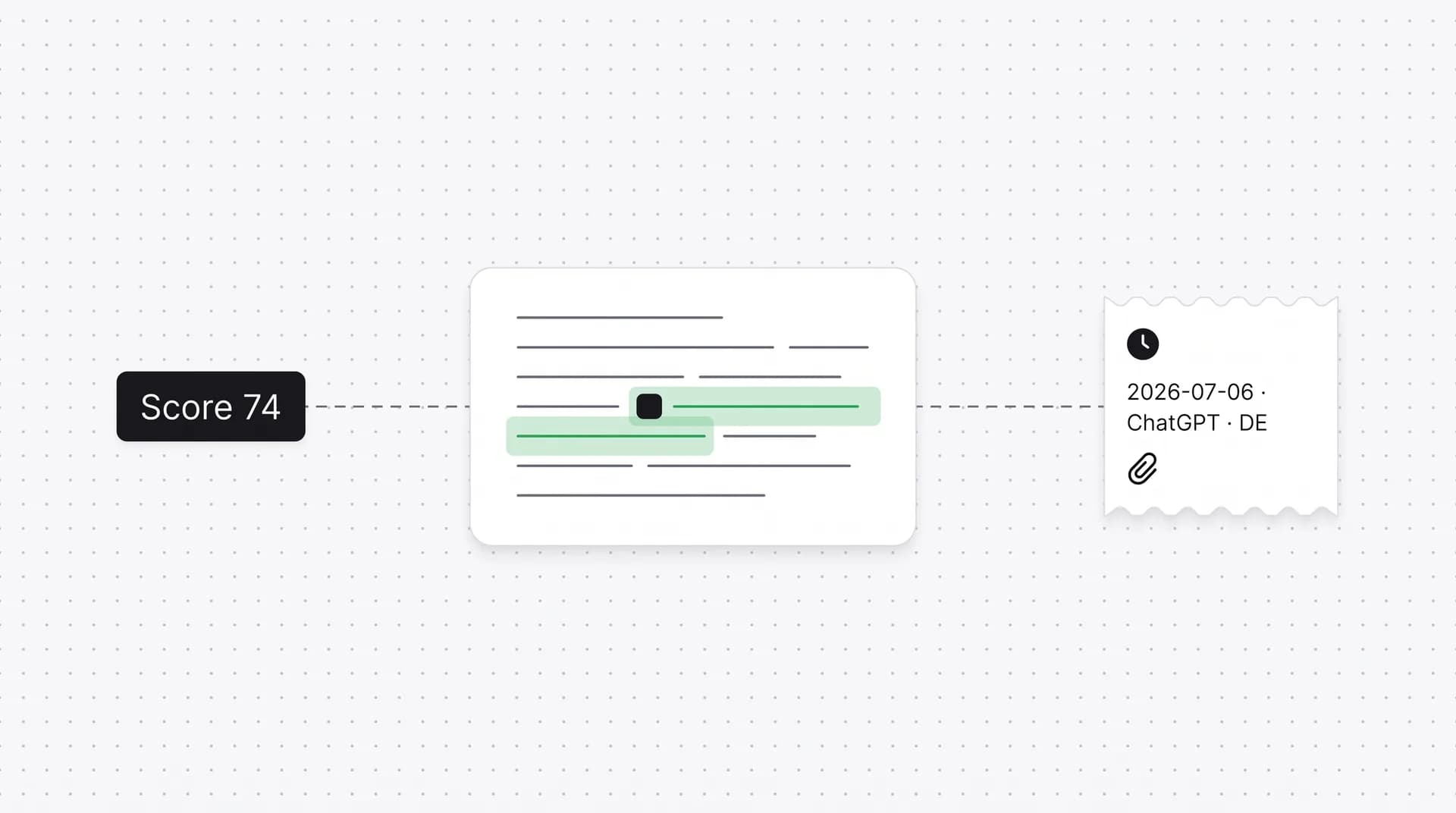
Click any score in FameScan and you land on the evidence: the exact engine answers behind it, with your mentions, the competitors named, the cited sources and the timestamps. That’s not a nice-to-have — it’s the difference between a measurement and an opinion. It’s also what makes the Action Center honest: every recommendation points at the answers that justify it.
What a good score looks like
Scores live on a 0–100 scale. FameScan presents that scale in four descriptive product bands: below 40, 40–60, 60–80 and above 80. These labels explain the score model; they are not claims about a market-wide percentile or customer outcome. The useful comparison is your own like-for-like trend on the buyer questions that matter to your project.